Is someone dying and in immediate need of the Last Rites?
Call us at 916-455-5114, and press “1” when prompted.
Your call will be directed to the priests of the parish.
Baptism
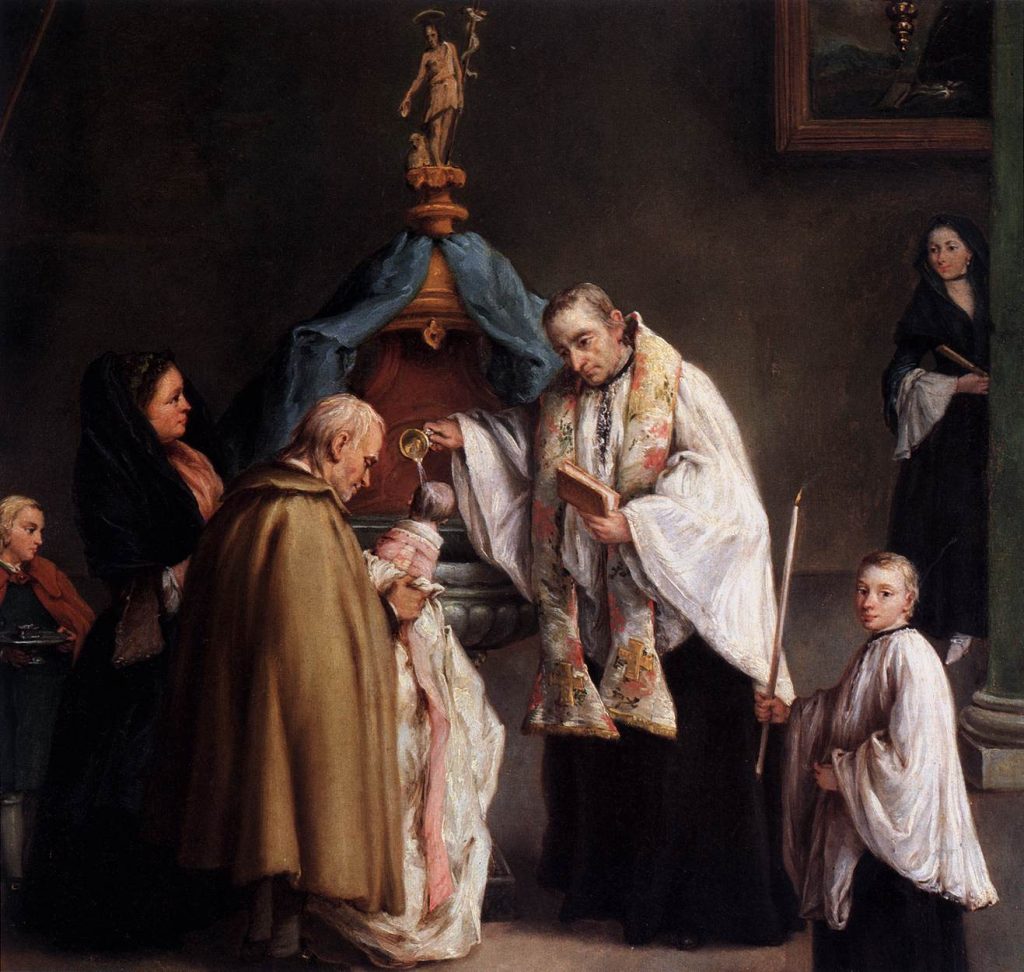
Infant baptisms are administered in the first two weeks after birth, in accord with Catholic Tradition and Canon Law. CIC 867: Parents are obliged to take care that infants are baptized in the first few weeks. Parents should take care to reach out to the parish within a day or two after the birth of their child to schedule Baptism at the earliest opportunity.
Baptisms should generally take place at a family’s proper parish. Under most circumstances, parents who are not parishioners will be directed to their own parish for the Baptism of their child. In the case where parents have not been consistently practicing the faith, but intend on making St. Stephen the First Martyr their parish home, they will be required to provide evidence of their stable resolve to renew their commitment to Our Lord and the Church, before their child can be baptized. This is because Baptism places real obligations and requirements on the child, and we must have a well-founded hope that the child will be equipped to meet them. Details should be worked out with one of the parish priests and will generally involve at least a demonstration of some weeks of consistent Sunday Mass attendance.
Godparents need to meet certain canonical requirements for eligibility. They must be:
- At least sixteen years old (though this can be dispensed for a just cause by the pastor);
- Catholic;
- Fully initiated, i.e. having received Baptism, Confirmation, and First Holy Communion;
- Practicing the Faith (e.g., regular at Sunday Mass, married in the Church);
- Not bound by any canonical penalty legitimately imposed or declared;
- Not the father or the mother.
Parents are advised to select godparents who will truly be good spiritual examples, intercessors, and mentors for their children.
On the day of the Baptism, parents will arrive at the scheduled time with their child and the godparents. Other guests are welcome to attend. They will be given a small form to fill out for the benefit of the sacramental record. The baptizing priest may confirm with the parents that their godparents meet the canonical requirements. The rites of Baptism then begin in the vestibule. Booklets with the texts of the rites in Latin and English will be made available to those present.
Parents and godparents who did not receive marriage instruction at our parish are asked to familiarize themselves with their obligations by reviewing the Marriage Workshop and Catechism series (for the latter, especially the lecture on Baptism).
In the event of a life-threatening emergency, infants should be baptized immediately in the hospital. If the threat is imminent, the father or someone else – even medical staff – can administer the Baptism. In this case, plain water (it need not be blessed) is used, poured onto the forehead of the child in such a way that it flows, taking care that the water makes contact with the skin (i.e. avoid pouring water only onto the hair).
The form is as follows: “[Name], I baptize you, in the name of the Father [here, pour water], and of the Son [pour water again], and of the Holy Spirit [pour water a third time].”
Nearly every word is essential for the form of Baptism, and all of them should be carefully and deliberately articulated. It is also necessary that one and the same person recites the words while pouring the water. Someone should film the Baptism so that a priest may confirm that it was done properly.
As soon as it is at all possible, the parish should be contacted by phone at 916-455-5114. Press 1 to be transferred to the priests who are on call.
If the child is stable, but there is a possibility of death (e.g. the child is in the NICU), the parish should be contacted immediately – by reaching the priests in the same manner as above – and one of them will come promptly to the hospital to administer the Baptism.
Once the priest confirms the validity of the Baptism or performs it himself, he will then consult the parents and make a judgment as to whether Confirmation ought to be given to the child as well. If the child is stable enough to warrant delaying Confirmation, the priest will return to the hospital to administer it in the event of the child’s condition changing for the worse.
Emergency Baptisms are followed up by what is called Supplying the Ceremonies, after the child is discharged from the hospital. This involves extending all of the rites, blessings, and exorcisms of a Solemn Baptism to the child, with the actual act of baptizing omitted.
Looking for details on Baptism for an adult? Click below for information about becoming a Catholic.

First Holy Communion
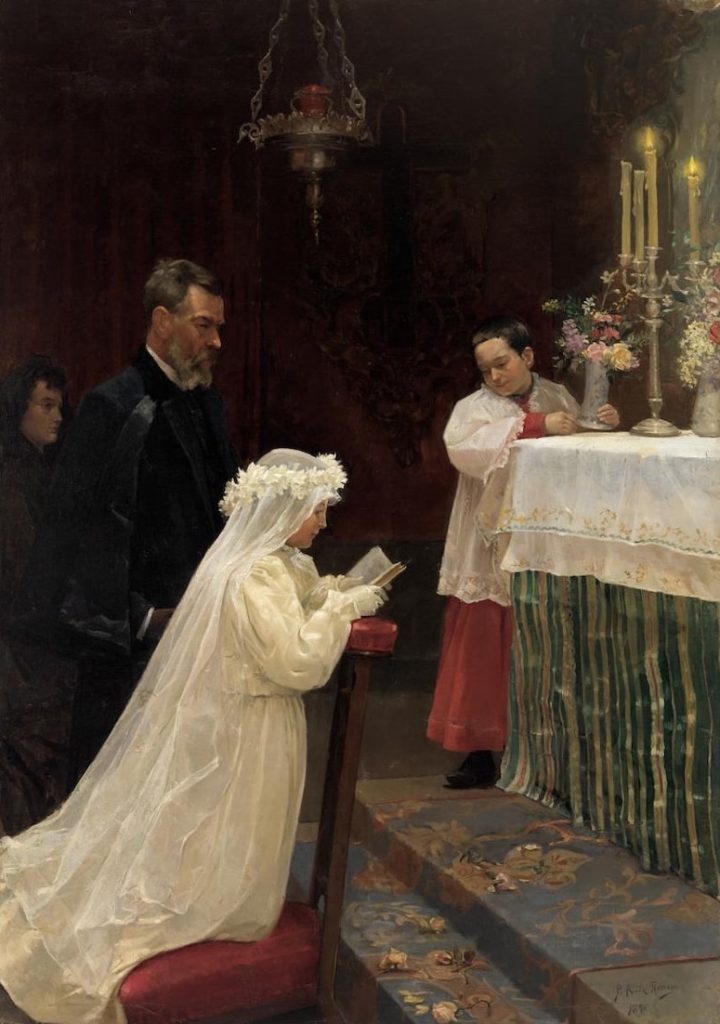
Children, who belong to families regularly attending the parish, and who are or will turn seven years old before the end of May, are eligible for the reception of First Holy Communion at St. Stephen’s. Parents should exercise judgment in confirming that their child exhibits the necessary maturity and dispositions before enrolling them in the catechism class. Good signs include: an ability to distinguish the Holy Eucharist from common bread, a development of conscience that recognizes the reality of sin, and a manifest desire for Holy Communion. Registrations for the class begin in October; they are due on the first Sunday in January. Parents whose children were not baptized at St. Stephen must also provide a recently issued baptismal certificate alongisde the registration form.
The catechism classes for First Holy Communion begin on the second Sunday of January. Parents and their children should assemble in the parish hall after the Sunday High Mass (i.e. around 2:45 pm). Each class will last between thirty and forty-five minutes. Classes continue every Sunday until late April, with a recess on Palm Sunday & Easter Sunday. One of the priests of the parish gives the instruction to the children.
Catechism for First Holy Communion for their children is a grave duty incumbent upon all Catholic parents; faithful attendance to classes must therefore be of the highest priority. Parents must make every effort to ensure that their child attends all the classes and arrives on time. Unexcused absences may disqualify children from making their Sacraments, at the discretion of the pastor.
A day of recollection is provided for the children prior to First Holy Communion, which will include a short test administered by the priests. If a child fails the test, one of the priests will speak with the parents about developing a catechetical plan for the benefit of the child; this may or may not involve a delay in the reception of Holy Communion, according to the circumstances.
First Holy Communion is administered to the children on a Saturday in May, at a High Mass held at noon. A reception will follow in the parish hall and families are asked to make a modest donation, at the time of registration, to defray its costs. Parents also have the option to schedule their child’s First Holy Communion at any of the public Masses in the month of May, if there are concerns about the provision of seating for guests in the church, or in the event of a scheduling conflict.
Regarding the dress code for the ceremonies: boys should wear a dark suit and the girls should wear a white dress with a veil. We ask that all those attending the ceremony be dressed modestly.
Please be assured of the prayers of the priests and parishioners of the community as children prepare for the reception of the greatest gift Our Lord has bestowed upon his Mystical Body, the Church – the gift of himself: Body, Blood, Soul, and Divinity.
Confirmation
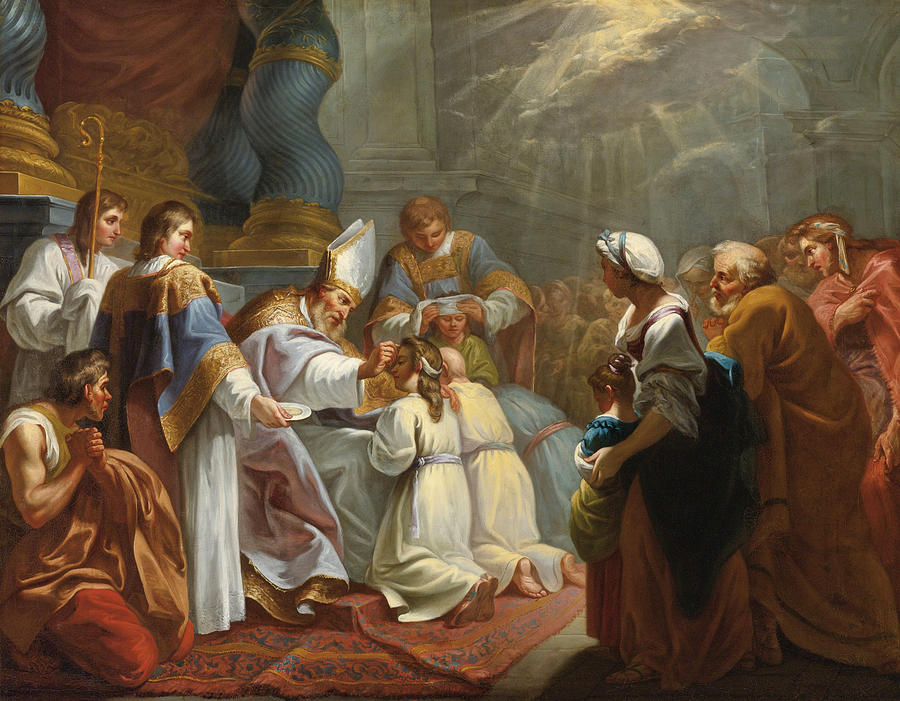
The minimum age for Confirmation classes is seventh grade, according to the instructions of our bishop. Concretely speaking, candidates should be or turn at least twelve years old during the calendar year that instructions begin. Registrations for the classes takes place during the summer months. Parents who did not have their children baptized at St. Stephen’s are required to submit a recently issued baptismal certificate along with the registration form. Please note that Confirmation classes are reserved for regular parishioners of our parish.
The classes meet on Sunday afternoons at 2:45 pm, starting on the first Sunday in September. The students assemble in Classroom 2 (for the young men) and Classroom 3 (for the young women), at 2:45 pm; each class lasts about forty-five minutes to an hour. There is usually a recess from classes on the two Sundays surrounding Christmas. The instruction is provided by our parish priests.
The bishop – or his representative (usually, an auxiliary bishop; otherwise, the vicar general) – is responsible for the administration of Confirmation, as he is the ordinary minister of the Sacrament. The Diocese usually promulgates the dates for Confirmation in November or December, after classes are underway. Often, we receive the bishop on a Saturday, at 2 pm, sometime in the spring. A reception follows in the parish hall; families are asked to make a modest donation, at the time of registration, to defray its costs.
Confirmation is a serious commitment on the part of your child; class should be every student’s priority. Please make every effort to ensure that your child attends all the classes and arrives on time. Excessive and unexcused absences may result in Confirmation being delayed.
A day of recollection is provided for the candidates prior to Confirmation, if at all possible.
Seating is very limited for Confirmations; usually only two seats are reserved for guests (not including the sponsor) of any particular candidate.
Regarding the dress code for the ceremonies: boys should wear a dark suit and the girls should wear a white dress with a veil. We ask that all those attending the ceremony be dressed modestly.
Finally, candidates are responsible for selecting a patron saint and a Confirmation sponsor; this is due at our last class of December. I remind you that, according to canon law, sponsors must be:
- At least sixteen years old (though this can be dispensed for a just cause by the pastor);
- Catholic;
- Fully initiated, i.e. having received Baptism, Confirmation, and First Holy Communion;
- Practicing the Faith (e.g., regular at Sunday Mass, married in the Church);
- Not bound by any canonical penalty legitimately imposed or declared;
- Not the father or the mother.
Looking for adult catechism for Confirmation? Click below.

Confessions
The priests are available at scheduled times for confessions twenty times every week, generally before and during Masses (with some exceptions or qualification on certain Sunday Masses or morning Masses). The confessionals are located in the back of the church. Penitents line up in the pews underneath the choir loft, then along the wall on the Epistle side of the church (this is the right side of the church, if you are facing the altar; it receives its name from the fact that the Epistle is proclaimed from that side of the altar and is distinguished from the Gospel side of the church).
Where confessions continue through Mass, the priests will remain until there are no remaining penitents.
If you have never been to confession in the traditional rite before, the process will be familiar to you. Enter the confessional and kneel (if possible), then begin by telling the priest your state in life and how long it has been since your last confession. You may then proceed to confess your sins. Mortal sins should be confessed first, and given by kind and number. The priest may give some guidance if further questions are warranted. Once you have finished, the priest may give some short counsel directed towards the amendment of life, then he will give you a penance and ask you to recite the Act of Contrition. Our confessionals are equipped with a card with the Act, if you need any help. When you begin, the priest will recite the introductory prayers for absolution sotto voce, waiting for you to finish before pronouncing the absolution over you. Afterwards, he will dismiss you with a blessing.
For our full schedule of confessions, click below. Confessions are also available by appointment, if necessary.
Anointing of the Sick
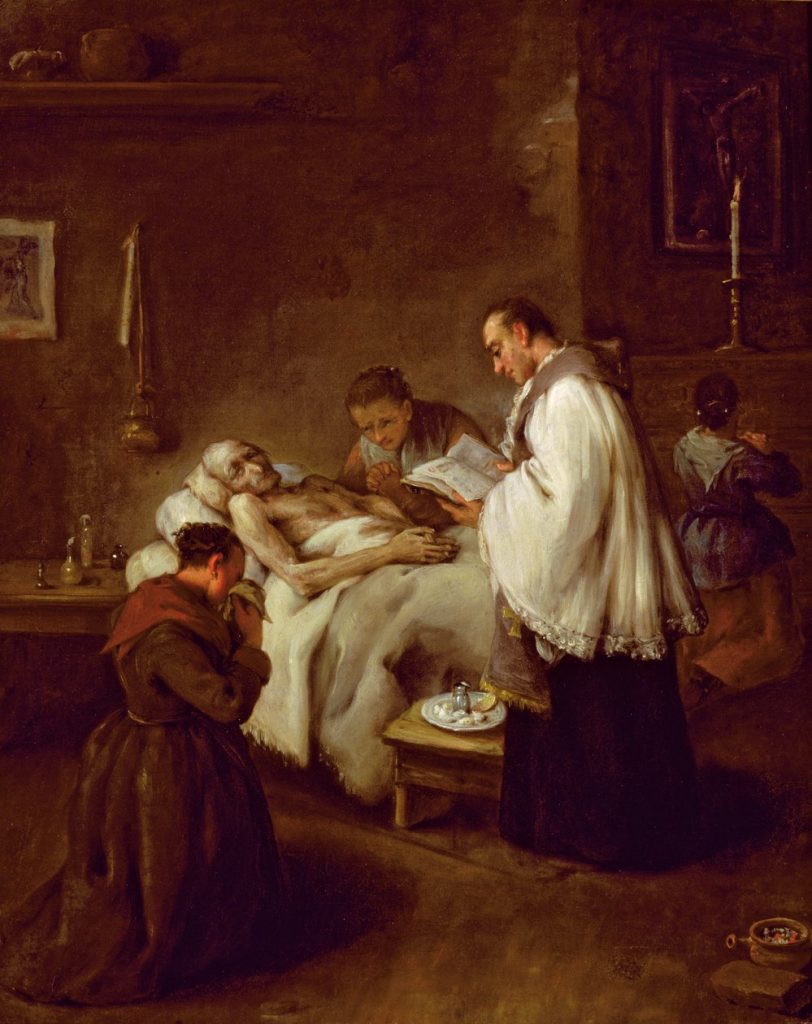
The Anointing of the Sick, also called Extreme Unction, can be administered to those that have a present illness or injury that may lead to death. As it targets the remains of sin (referring to the wounds left behind by forgiven sin, such as the inclination and attachment to sin, as well as the tendency to lose confidence in the mercy of God), children before the age of reason are not fit subjects for this Sacrament. Do note that parents should secure for children in danger of death the Sacrament of Confirmation, if they have not already received it.
A secondary effect of the Sacrament is the physical healing of the ailment, which takes place according to the providential wisdom of God.
The Sacrament can be repeated in the event of a new illness, a serious progression of illness, or the return of an illness after recovery. As the Sacrament provides continuing graces to strengthen the soul throughout the period of illness, it should be sought immediately upon receiving a serious diagnosis. For example, someone diagnosed with cancer should make arrangements for the Anointing shortly after receiving the news, rather than postponing it until death is imminent.
Where imminent death is a possibility, the Anointing of the Sick is followed by the Apostolic Pardon (a plenary indulgence that the Holy Father deputes priests to extend to the dying). Viaticum (i.e. Holy Communion for the dying) is also given, if possible. Together with the Anointing, these constitute what is generally referred to as the Last Rites.
Parishioners who are still able to come to the church (e.g. for Holy Mass) can schedule an Anointing of the Sick, which will be held in the sacristy. For the homebound, the priests can make a visit upon request.
If the priest is visiting your home to bring you the Sacraments, every effort should be made to tidy the home in preparation of receiving its divine guest. Televisions and radios should be turned off. A horizontal surface should be cleared near the sick person, and two lit candles and a crucifix placed upon it. A little glass of water for the ablutions is also helpful.
When the priest arrives, someone should meet him at the door with one of the lit candles. After genuflecting, he leads the priest to the room of the sick person, where everyone waits quietly. Upon the arrival of the Blessed Sacrament, everyone kneels. If the sick desires Confession, everyone rises and genuflects, then departs to give the person privacy. The priest will call everyone back in for the administration of the other Sacraments. Upon returning, everyone kneels again until the sick person has received Our Lord.
In the event of an emergency, the parish should be contacted immediately. Call our office line (916-455-5114) and then press 1 to be transferred to the priests, who are on call twenty-four hours a day.
Matrimony
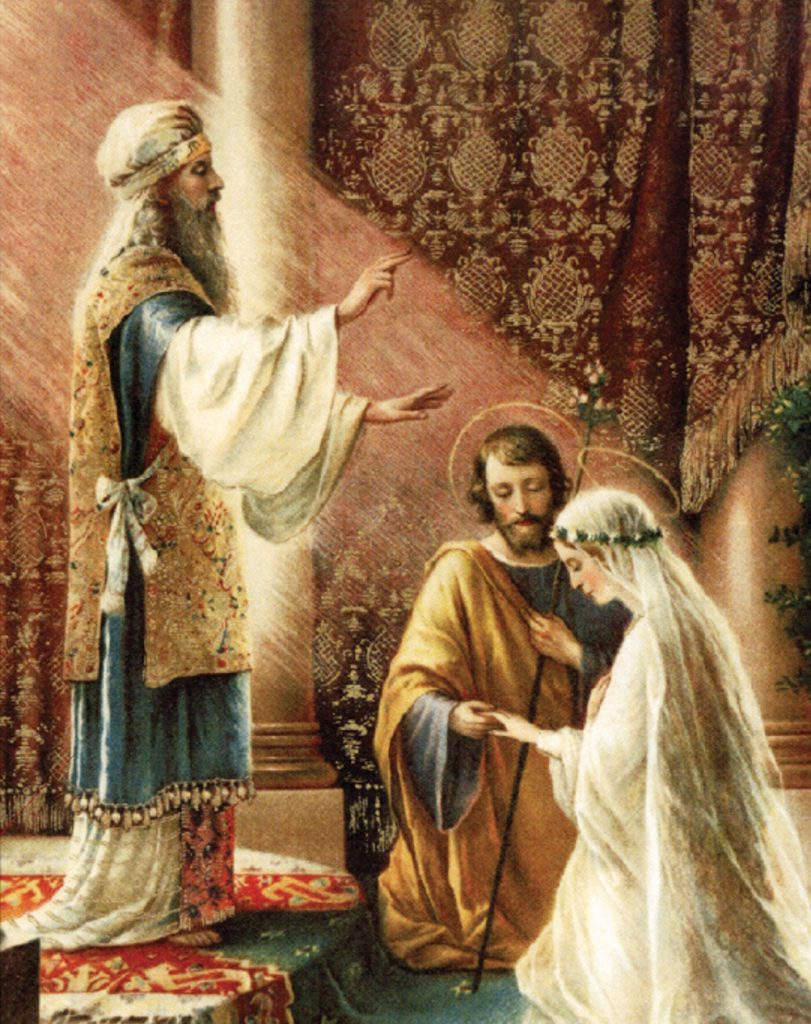
Catholic marriage requires a period of instruction and discernment; under normal circumstances, this implies a period of engagement of at least six months. As soon as possible after engagement, the couple should reach out to the pastor, who will make arrangements for their marriage instruction to begin. He will assign to them one of the parish priests, who will meet with them a number of times over the preparation time period, giving them instruction and helping them navigate through the procurement of the necessary documents and testimonials.
One of the principal resources used during the preparation process is the Marriage Workshop, given by Fr. Joshua Curtis, FSSP to the married couples of the parish in the spring of 2024.
Parishioners seeking marriage are not charged for the use of the church. They are also given the option, free of charge, for the use of the parish hall for a reception, provided they observe the decorum proper to a space proximate to a church (i.e. no modern music or dancing). The use of the parish hall also requires it being cleaned and put back in order at the conclusion of the reception.
Due to the restrictions of our parish schedule, our church is not generally available for weddings for non-parishioners. Likewise, our priests are usually unable to travel to witness marriages outside of our parish.
We remind all Catholics that they are bound by canonical form. This means that they must have their marriage vows witnessed by an ecclesiastic witness (a priest or deacon with proper faculties) and two other witnesses. A failure to observe canonical form is invalidating, meaning there is no marriage bond whatsoever between the two parties. Parishioners who have unfortunately found themselves in this situation should reach out to the priests to begin a convalidation process. Convalidations follow the same marriage preparation detailed above, with some differences: in some circumstances they are expedited (according to the prudential judgment of the priest preparing the couple); and the convalidation ceremony itself usually takes place outside the context of a Nuptial Mass, in the side chapel of Our Lady. It is a quiet ceremony with a small number of guests. Before the convalidation, the couple will need to observe good boundaries to observe chastity in a manner keeping with their state in life.
Holy Orders
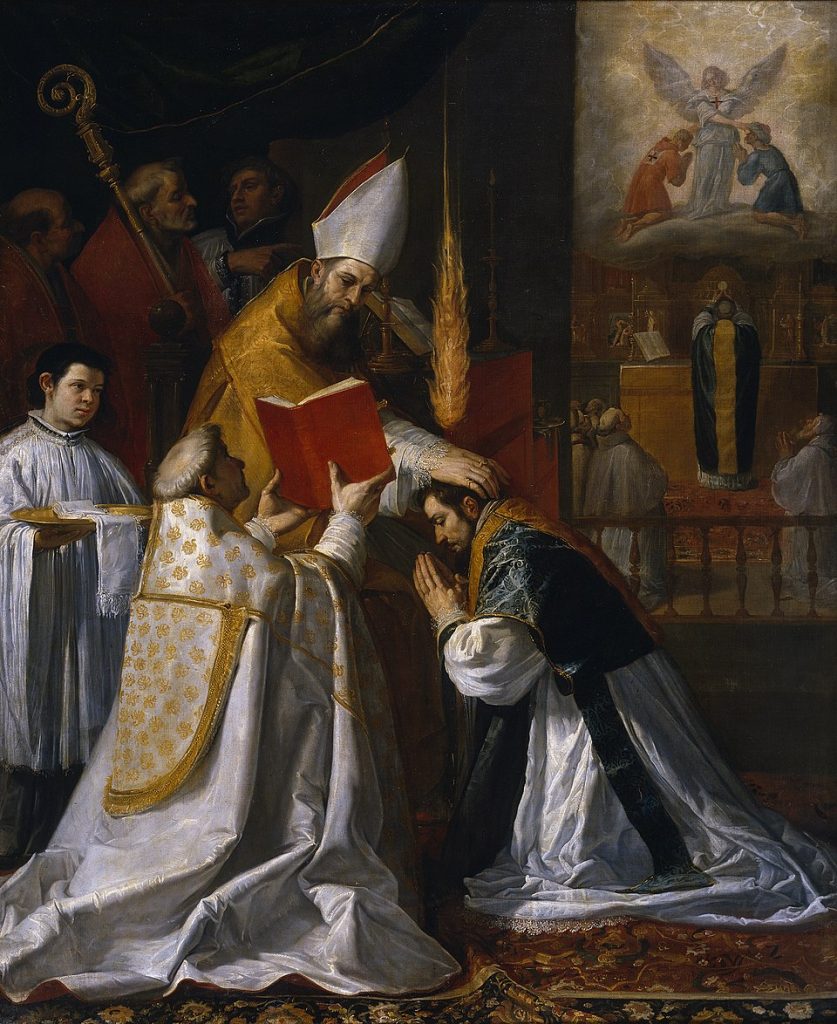
Young men interested in the priesthood should establish spiritual direction with one of the parish priests. Those that are interested in entering the Priestly Fraternity of St. Peter can explore some elements of seminary formation through the website for Our Lady of Guadalupe Seminary. With the consent of their spiritual director, they are free to schedule a visit to the seminary, which usually lasts three to seven days. During their visit, they will participate in the Mass and Divine Office and attend meals, classes, and recreation with the seminarians presently in formation.
While not a Sacrament, young men and women that are discerning religious life are likewise encouraged to contact one of the parish priests to assist them with their discernment.
Parents hoping to foster priestly and religious vocations among their children should take care to strengthen their own marriage, establish a good plan of life for the family (including a regular schedule of prayer), provide their children with frequent opportunities for Mass, confession, and visits to the Blessed Sacrament, and provide for the growth of their children in the life of prayer, penance, almsgiving, and virtue. In our modern age, it is especially important to help children avoid any kind of compulsive habits, especially in the spheres of social media, addictive video games (here, especially those games that are financially incentivized to foster addiction by subscriptions or in-app purchases), and holy purity. Youth that exhibit signs of maturity, virtue, and piety are excellent candidates for consecrated life.
For entrance into the seminary in particular, formators will examine candidates based on four pillars:
- The intellectual life. Candidates should possess a strong intelligence (generally, A’s and B’s in their academics) and should not consider study to be onerous and difficult.
- The moral life. Candidates will not be admitted to the seminary without freedom from habitual mortal sin and should be inclined to regular prayer and assistance at Holy Mass, when and where possible.
- Health. Candidates should have a normal constitution, not prone to frequent and prolonged illness. Some conditions such as epilepsy and chronic insomnia are disqualifying as they are incompatible with priestly responsibilities. Psychological health is also of supreme importance; candidates should be free from chronic depression, personality disorders, or any other serious psychological impediments.
- Right intention. Candidates must desire above all to enter the seminary for the glory of God and the salvation of souls.